|
Home
Introduction
to NOUFORS
What's
New
Products
Michel
M. Deschamps - Director
Personal
Sightings
Sightings
Archive
Newspaper
Archive
UFOs
UFO
Physical Traces
Animal
Mutilations
UFO
Occupants
Crop
Circles
Audio
Clips
Documents
Majestic-12
Politicians
and UFOs
Military
Officers
and UFOs
Scientists
and UFOs
Astronauts
and UFOs
Pilots
and UFOs
Cops
and Saucers
Celebrities
and UFOs
Who's
Who in
UFOlogy
Skeptics
and Debunkers
Encyclopedia
of Terminology and Abbreviations
Kidz'
Korner
Links
Recommended
Reading
Recommended
Viewing
|
|
|
How
To Identify UFOs In Thirty Minutes Or Less
Contrary
to what the leading
skeptics and debunkers will tell you, it
is possible for anyone to easily identify or distinguish
UFOs from any man-made objects and natural phenomena in
the sky. Once you've had your first sighting of an Unidentified
Flying Object (UFO) and you've familiarized yourself with
the night sky, you'll quickly become a good observer and
you'll know exactly what to look for, the next time you're
skywatching.
Even
when you've had as many sightings as I've had, you can still
make mistakes! But you learn to make very few of them because
you can't afford to look like a fool in front of your family
members, friends...and especially, the public - if and when
you decide to report your sighting to the media.
The
only mistake I made was embarrassing, to say the least.
One particular night, I stood in a field and waved my flashlight
at what looked to be a cluster of three lights coming head-on...one
large white light flanked by two smaller lights. They were
completely silent...until, that is, a few minutes later
when they got closer and I heard the distinct sound of a
motor. I then realized I was looking at a small plane coming
in for a landing at our local airport. It took a few more
seconds or so for the aircraft to pass right over my head
and I could finally see the flashing wing-tip lights and
the anti-collision light on the vertical fin...not to mention
hearing the loud roar of the engine!
So
before jumping to any conclusions as to what you're seeing,
I would suggest that you stay put, look carefully at the
object(s) and watch for any tell-tale signs of an earthly
origin. Through trial and error, it may take as much as
fifteen to thirty minutes to identify a true unknown and
set them apart from all the other aerial - and celestial
objects in the sky. If the sighting lasts longer than an
hour, and it has reached the "level of high strangeness",
then you've truly witnessed something out of the ordinary.
For the purpose of helping in identifying a true UFO, I
created the following checklist of characteristics as a
guideline:
1)
Shape
2) Color(s)
3) Sound
4) Size
5) Speed
6) Behavior
7) Level of High Strangeness
8) Duration of Sighting
|
|
Click
here
for Theories
and False Explanations for UFOs
|
|
|
1)
Shape
All
flying saucers are UFOs but not all UFOs are flying saucers.
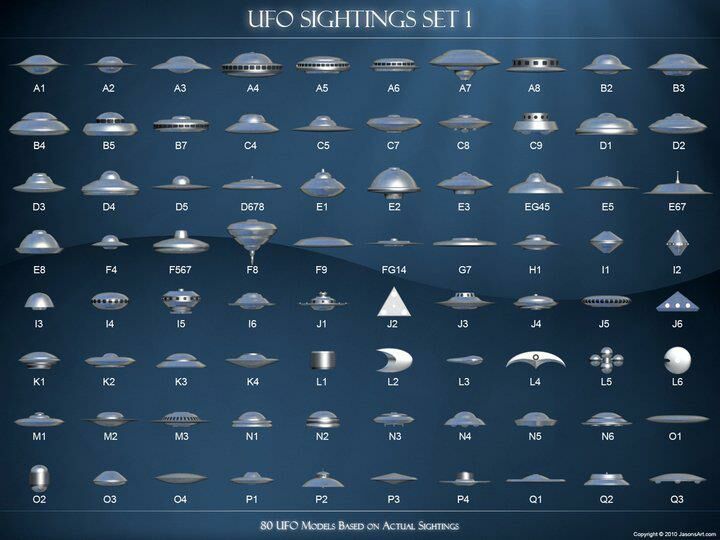
A UFO's appearance may vary because there are as many models
of them as there are of man-made vehicles. Eyewitnesses
have reported a number of shapes: cigars, footballs, triangles,
rectangles, ovals, balls of light, and so on. The following
image contains a large number of these reported objects
of unknown origin.
Click
on images to enlarge
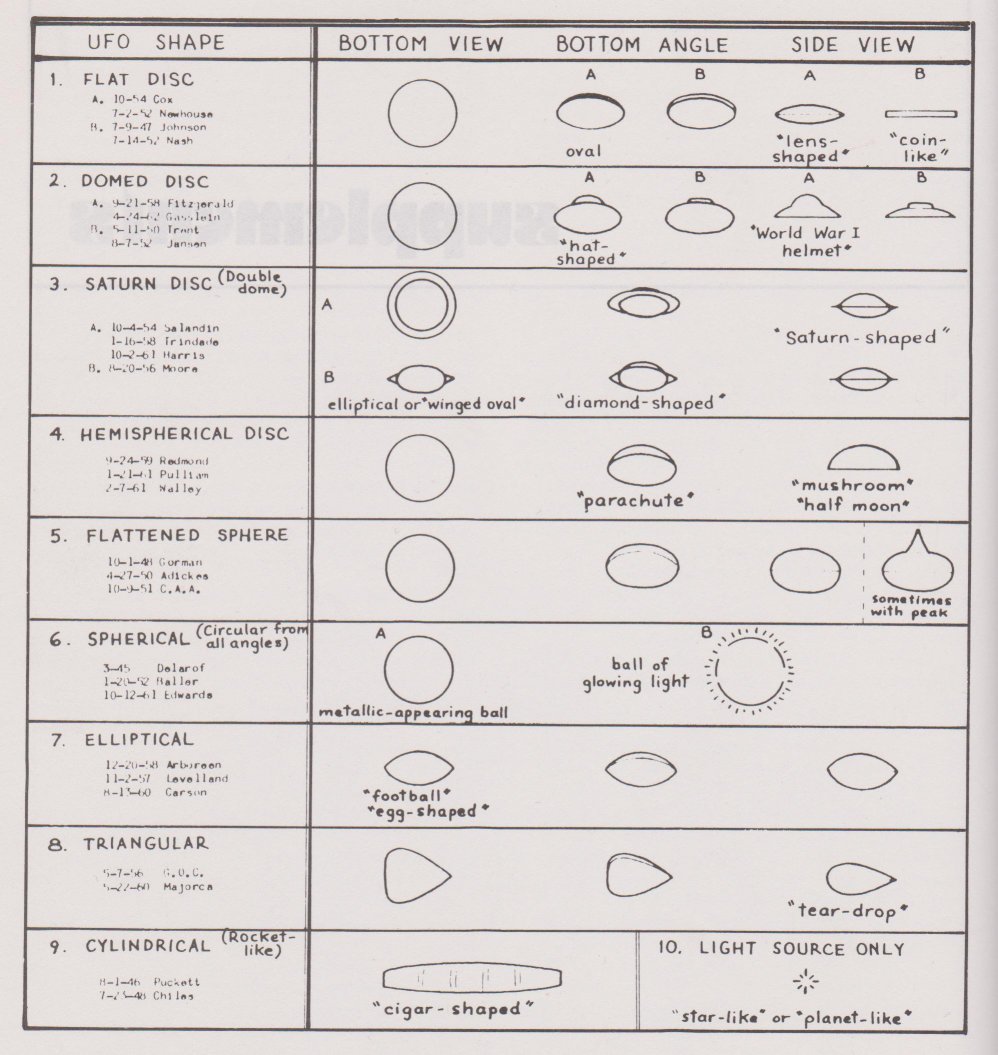
Commonly
reported UFO shapes. (Courtesy ICUFON/NICAP)
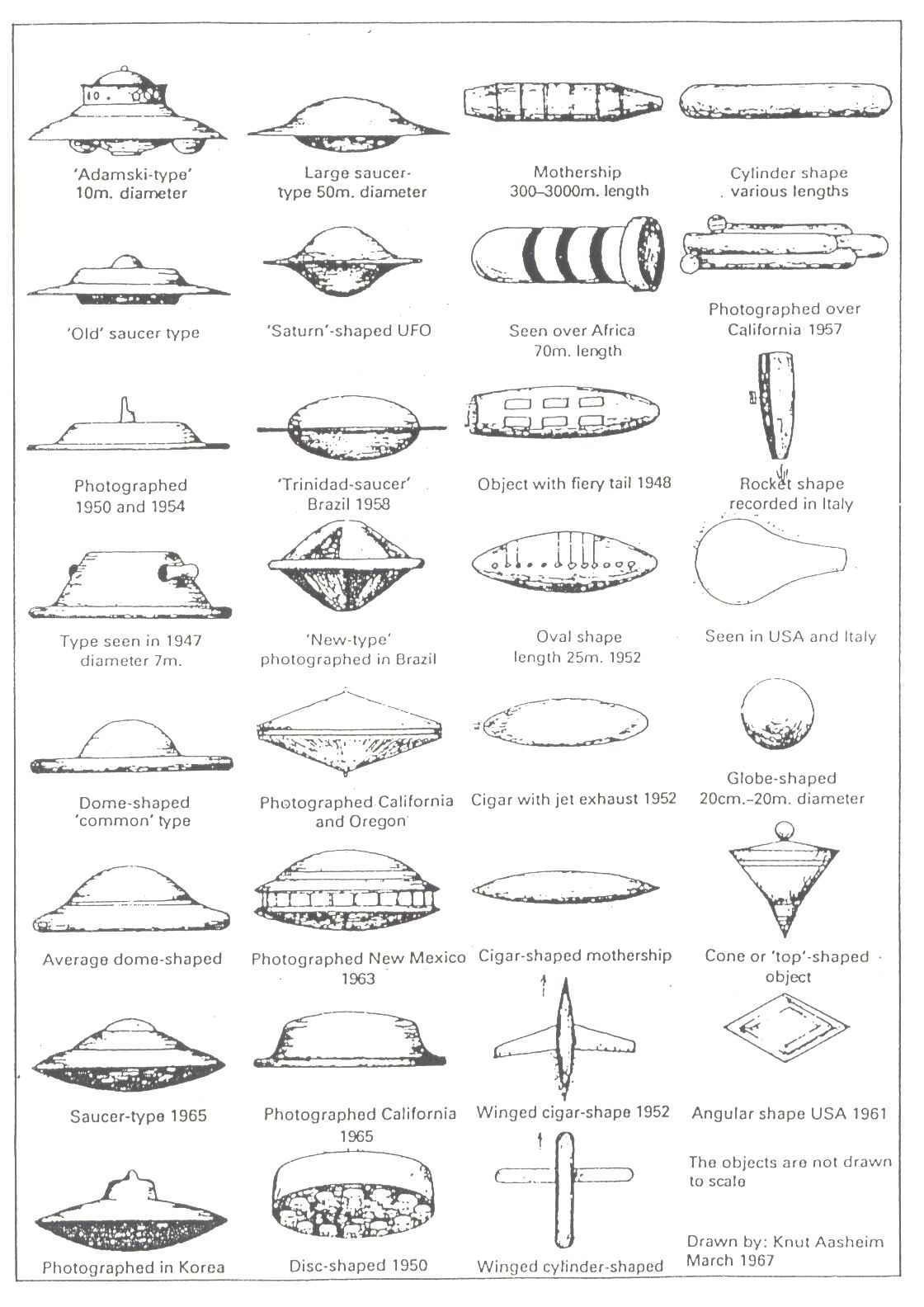
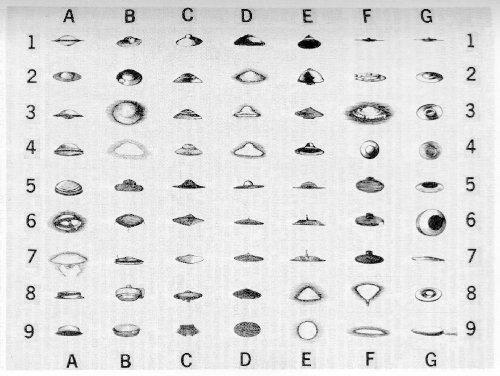
A
selection of UFOs (some of which are proven hoaxes). (Courtesy
ICUFON)
In
the less interesting sightings, the object may appear as
a bright, white star, preventing you from discerning any
specific shape...even if you were to zoom in with binoculars,
a telescope or a video camera.* And when it moves away from
you, it looks exactly the same as when you first spotted
it...a single pinprick of light as bright as Jupiter (at
its brightest) or a faint star.
Some
objects will have an extended apparent diameter, or "fuzzy"
luminosity. Some star-like objects will be motionless for
extended periods of time, or will be seen rapidly crossing
the sky, possibly with peculiar trajectories.
*
When you zoom in for a close-up of any light source with
a video camera, you may end up with what is known as the
"batman emblem" - a circle with one or two bites
taken out at the top and one at the bottom. This is an artifact
of the camcorder because the automatic focus of the camera
is unable to compensate for the brilliance of the object
you're looking at, and as a result, you get a distorted
image of the UFO.
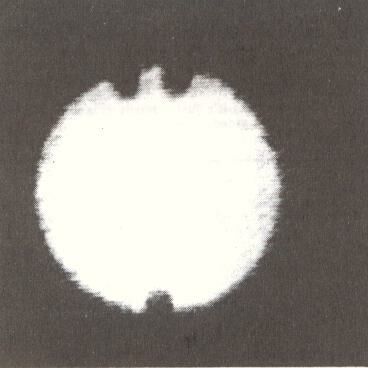
"Batman
emblem"
|
|
|
2)
Color(s)
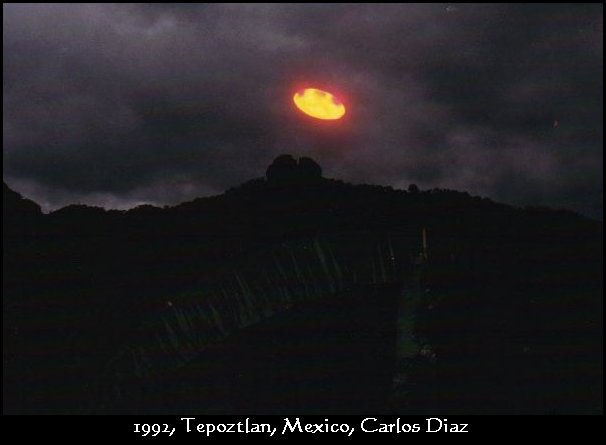
At
night, some UFOs will display very unusual light patterns,
as well as shades of colors not typically found on conventional
aircraft. You may see a dark oval shape with multicolored
lights around its perimeter, or the object itself can be
one large, blinding light of one color or another.
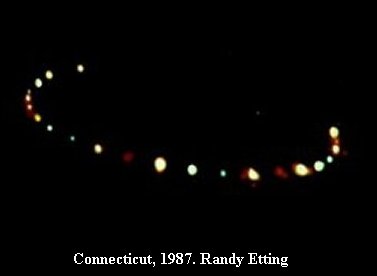

The
colors may be so vivid that the observer is able to make
them out...even in the darkest of night skies. Some of the
more commonly reported colors are: red, lime green, sky
blue, yellow, amber...and sometimes, pink.

Another
good example of these brightly-colored flying objects are
the Green
Fireballs.
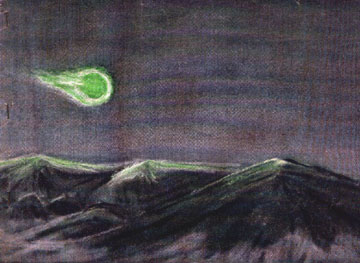
"This
is a scrupulously accurate eyewitness painting of a mysterious
green fireball rushing through the night sky over New Mexico
. . . by Mrs.
Lincoln LaPaz," LIFE magazine, April 7, 1952.
________________
In
cases where the witnesses remember the type of colors the
UFO(s) displayed during the observation, they can turn to
the chart below for reference.
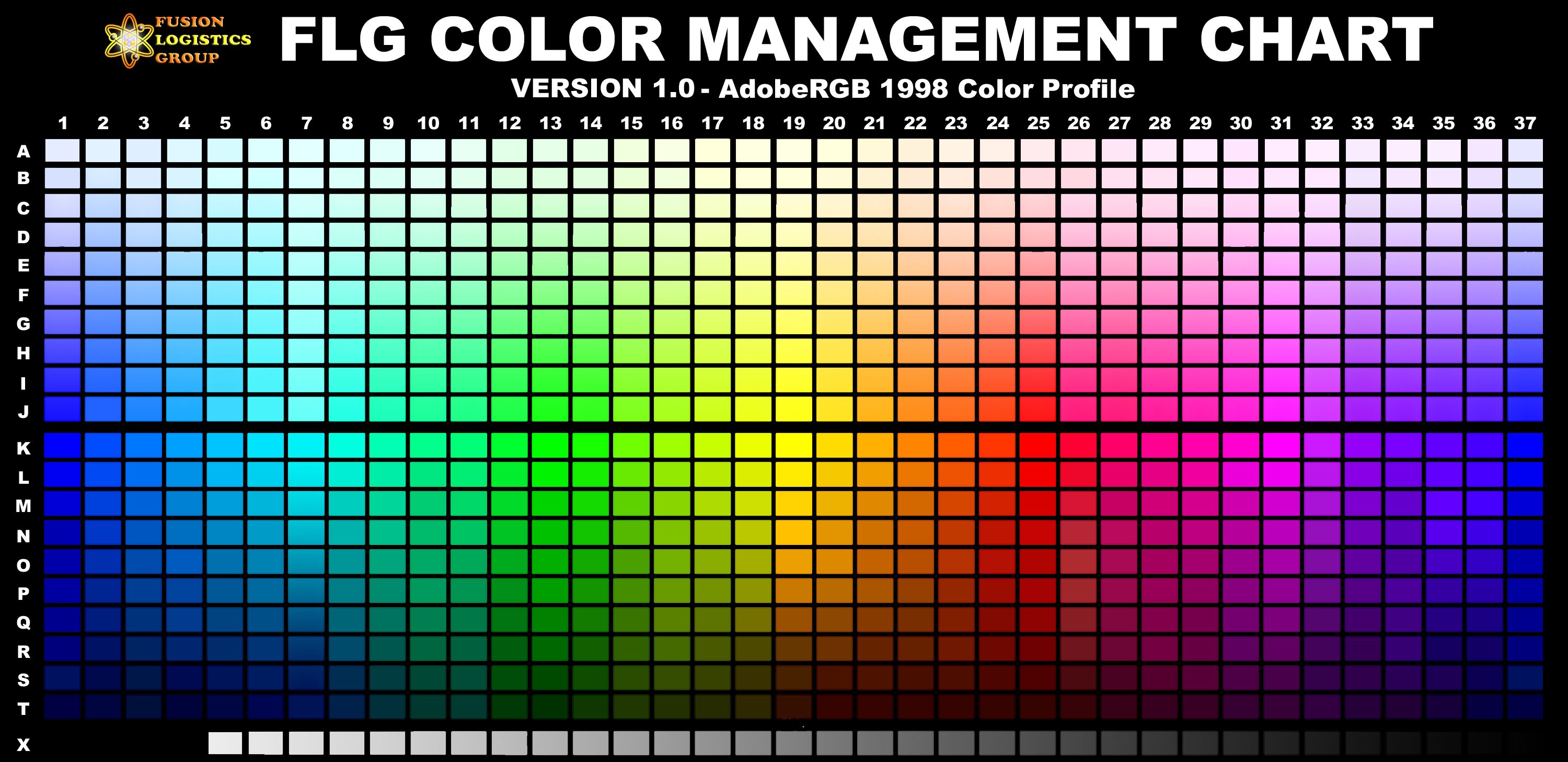
NOTE:
This color chart may not display every color in existence,
but it should be useful in determining the color(s) of a
particular object or objects seen by witnesses.
|
|
|
3)
Sound
UFOs,
in general, are extremely silent. But there are some cases
when an audible sound is heard either before, during or
after the sighting of a UFO. What follows is a list of some
of the sounds that have accompanied these rare sightings:
•
A
beeping sound - or series of beeps
• sound of a diesel engine
• sound of a washing machine
• a whistling sound
• a whooshing sound
• a humming sound
A
Southern Ontario researcher by the name of Lindy
Tucker has not only gathered information on such
cases, but has been a witness to it, as well.
|
|
|
4)
Size
Determining
the size of an unknown object is not always easy, especially
if the object itself is located quite a distance away from
your eyes. But if the object is close enough to the witness,
figuring out its approximate size may not be a problem...especially
if you have other objects of reference nearby, such as a
tree, a house, etc.
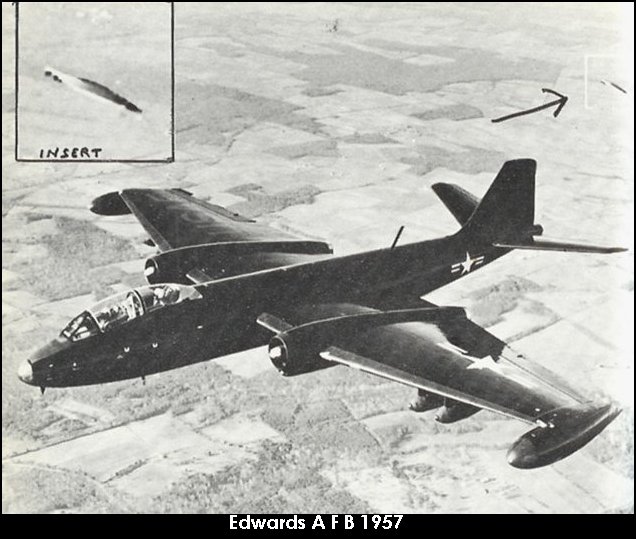
In
most instances, the object is reported to be the approximate
size of an aircraft or larger.
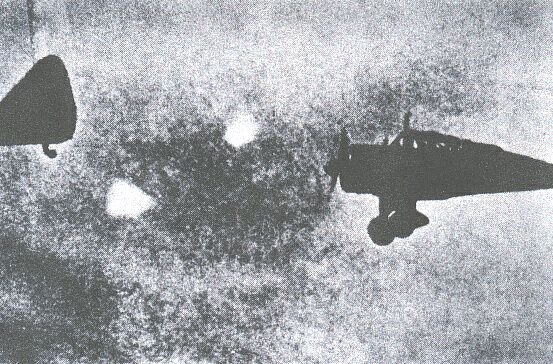
During
World War II, pilots would report seeing small balls of
light nicknamed "Foo Fighters" which maneuvered
around the fighter plane formations and kept pace with them
as they flew over Germany during their bombing runs. Similar
objects were seen in the Japanese theater as well, witnessed
by both pilots and gunners. These objects were small in
size, and yet flew as if they were under intelligent control.
But
in cases where a "mother ship" is spotted, the
reported size of the object is gigantic. One such case took
place in the Yukon Territory on December 11, 1996. A very
large object was seen by at least 31 people near Fox Lake.
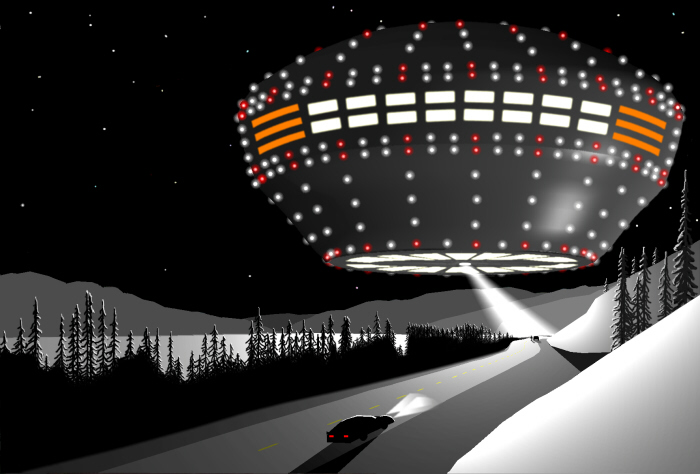
After
several calculations in triangulation, and considering the
best six estimates that researchers came up with, the object
appears to have been the size of several football stadiums!
Another
good case that comes to mind is The
Phoenix Lights UFO case which occurred over
the State of Arizona on March 13, 1997. Ten thousand eyewitnesses
from across the state looked on as large boomerang and/or
V-shaped formations of lights moved across Arizona, that
evening. The sightings took place as people were getting
ready to observe the Hale-Bopp comet as it made its way
across the evening sky.
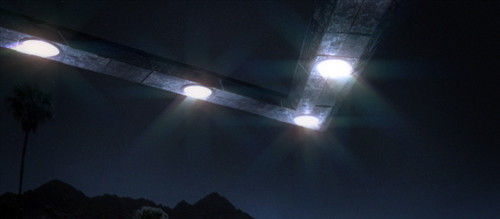
The
tremendous size of the objects - estimated to be about a
mile and half wide, from tip to tip - and the complete lack
of sound indicate that something out of the ordinary maneuvered
over Phoenix, and was witnessed by a large number of people,
including pilots, doctors and engineers. This was probably
the most important case of mass sightings on record, thus
far.
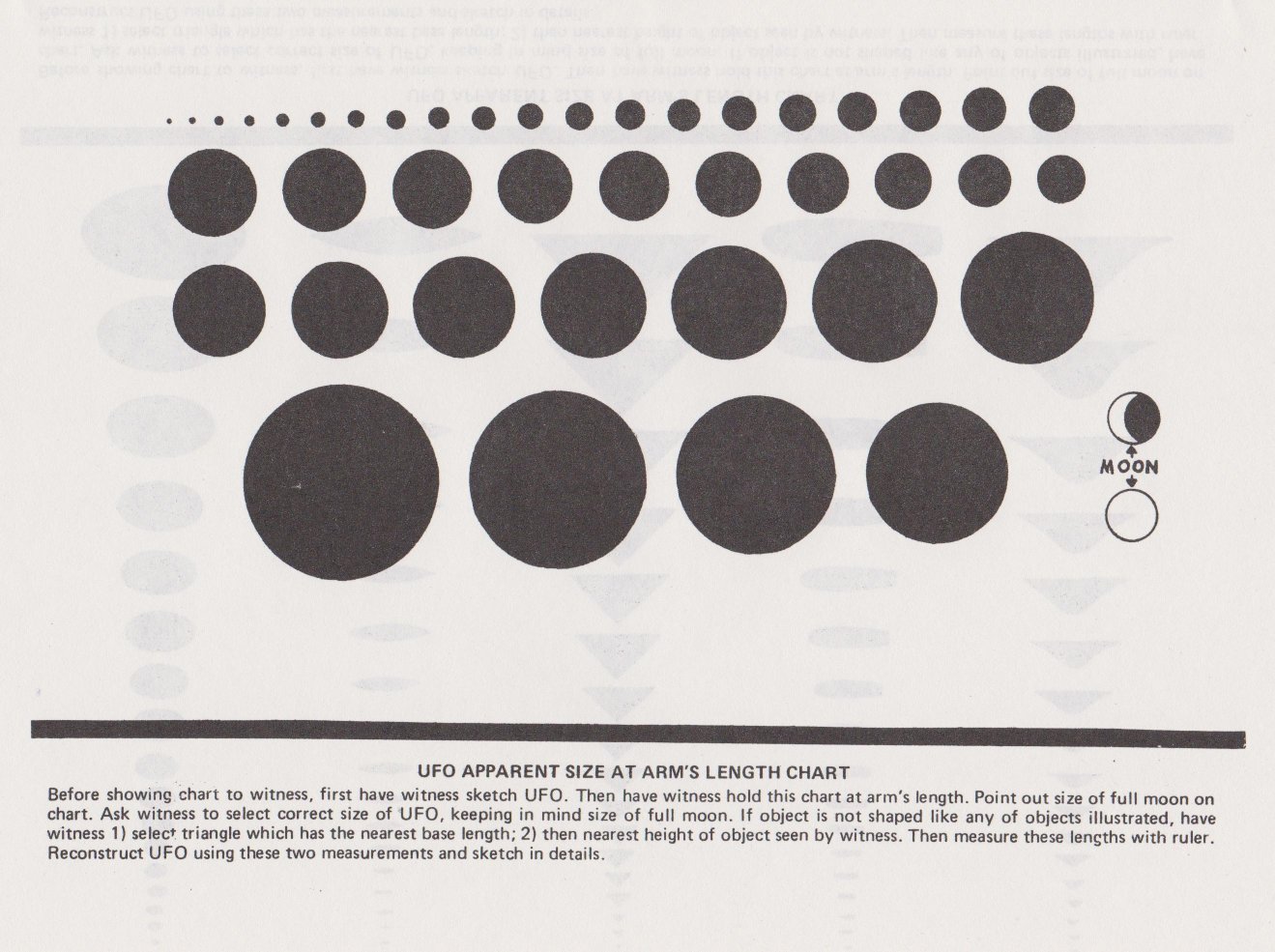

These
two charts are available to anyone who cares to demonstrate
how large an object appeared to be to them as they hold
them up at arm's length. In the past, this would have cleared
up a lot of confusion when an eyewitness would describe
having seen something about the size of a washtub or a saucer
by simply adding "if you held one up at arm's length".
|
|
|
5)
Speed
Not
so well known is the fact that a good number of Unidentified
Flying Objects have been tracked on several types of radar
instruments which, in turn, have recorded these objects
travelling at speeds in excess of 10,000 miles an hour or
more.
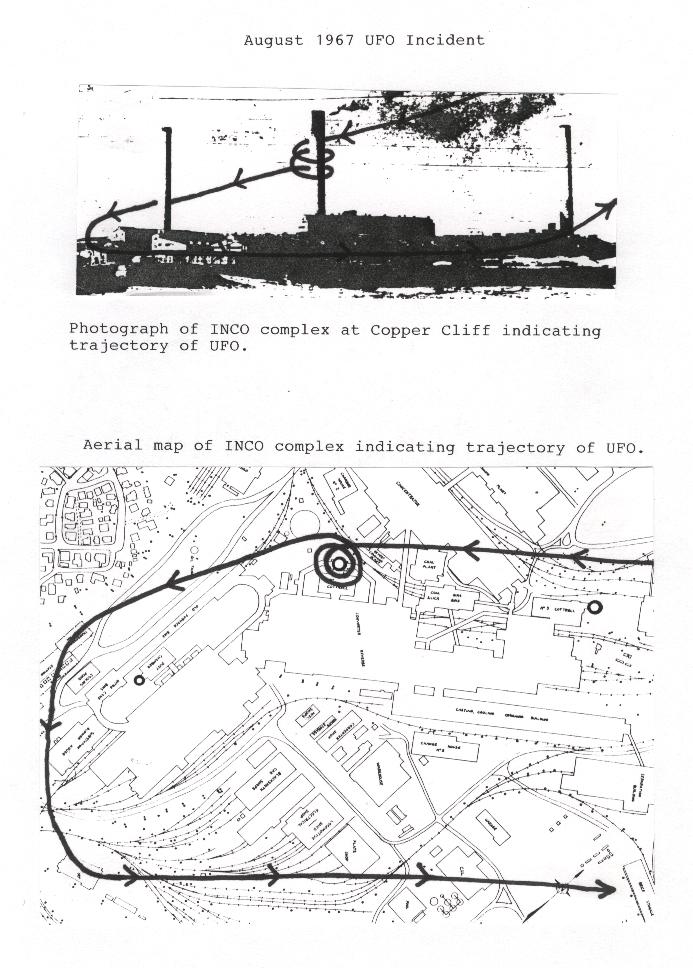
August
1967 UFO Incident -
Copper Cliff, Ontario, Canada.
One
particular event that took place in the Sudbury area happened
in late 1967 over the INCO complex in Copper Cliff. Twenty
witnesses stood and watched in awe as a UFO maneuvered twice
around the middle stack, then proceeded to pass in front
of them, travelling at an estimated speed of 15 miles an
hour. Shortly thereafter, the object angled up at a 45°
angle and sped up into the sky in seconds! The next day,
one of the men who worked there contacted the Falconbridge
Radar Base and was told that the object had been clocked
travelling at the incredible speed of 22,000 miles an hour!
Another
perfect example of the incredible acceleration performed
by UFOs took place on September 15, 1991 and was captured
on film by the crew of Space Shuttle Discovery:
Space
Shuttle Discovery (STS-48) films UFOs
September 15, 1991, between 20:30 and 20:45
GMT
On
September 15, 1991, between 20:30 and 20:45 Greenwich Mean
Time, the TV camera located at the back of Space Shuttle
Discovery ’s cargo bay was trained on the Earth’s
horizon while the astronauts were occupied with other tasks.
A
glowing object suddenly appeared just below the horizon
and "slowly" moved from right to left and slightly
upward in the picture. Several other glowing objects had
been visible before this, and had been moving in various
directions. Then a flash of light occurred at the lower
left of the screen; and the main object, along with the
others, changed direction and accelerated away sharply,
as if in response to the flash. Shortly thereafter a streak
of light moved through the region vacated by the main object,
and then another streak moved through the right of the screen,
where two of the other objects had been. Roughly 65 seconds
after the main flash, the TV camera rotated down, showing
a fuzzy picture of the side of the cargo bay. It then refocused,
turned toward the front of the cargo bay, and stopped broadcasting.
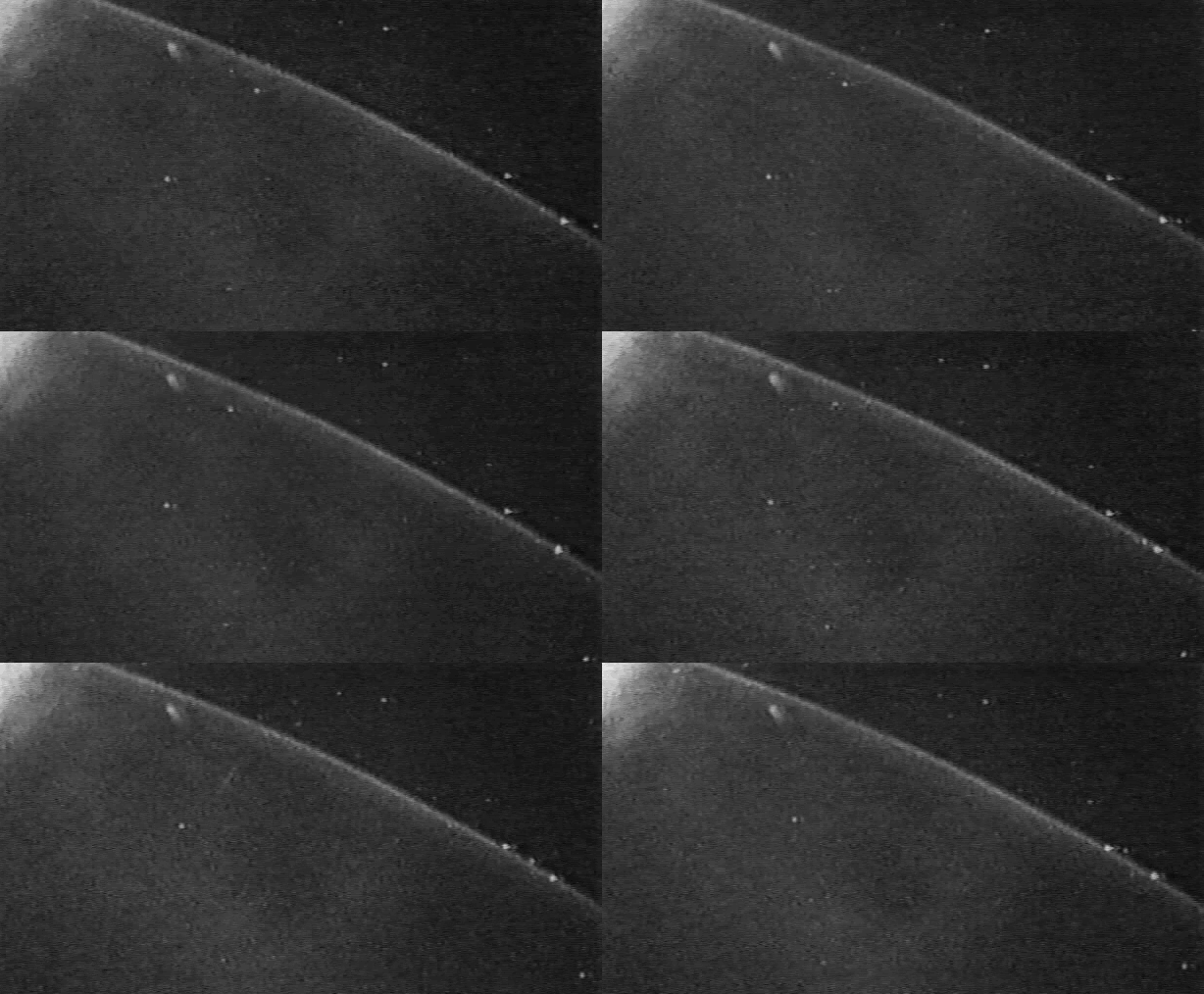
Clip
from NBC broadcast on STS-48 UFOs
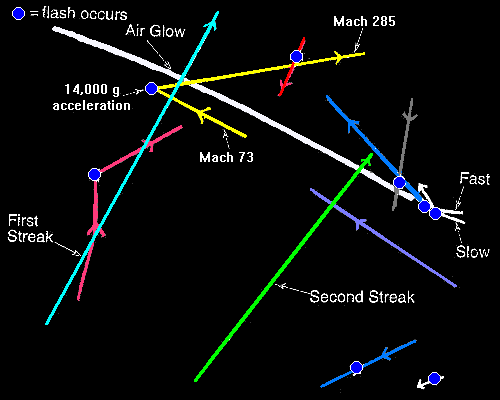
Diagram
of Traced Trajectories
• The
distance from the Discovery to the Earth’s horizon
is 2,757 kilometers.
• The
UFO's speed before accelerating into space is 87,000 kph
(Mach 73).
• Three
seconds after the light flash, the UFO changes direction
sharply and accelerates off into space at 340,000 kph (Mach
285) within 2.2 seconds.
• Such
an acceleration would produce 14,000 g of force.
One
of the most spectacular video footage of a UFO encounter
was taken by cameras on board the Discovery space shuttle,
STS-48, on 15 September, 1991. The video sequence was picked
up live by a number of amateurs who were directly monitoring
the transmissions. The material has been shown in news broadcasts
worldwide.
The
video shows several small bright objects maneuvering on
screen, apparently interacting with one another in a complex
fashion. Skeptics have usually insisted these are merely
shots of some of the many small ice particles which inevitably
end up in orbit with every space shuttle.
UFO
investigators were quick to dispute this interpretation,
and US scientist Richard C. Hoagland soon conclusively demonstrated
the objects were actually large in size and many hundreds
of kilometers away from the shuttle.
One
UFO in particular appears to rise up from below the Earth’s
dawn horizon and can be clearly seen emerging from behind
the atmosphere and the ‘airglow’ layers. It is
certainly in orbit around the Earth, some distance out in
space, and traveling quickly.
A
sudden, bright flash of light is then seen to the left of
the picture, below the shuttle. The UFO then turns at a
sharp angle and heads out into space at very high speed.
Two thin beams of light (or possibly condensation trails)
move rapidly up from the Earth’s surface towards where
the UFO would have been if it had continued in its original
orbit.
________
The
light flash and light beams (or contrails) that shoot into
space have variously been described as a ground-based attempt
to disrupt or destroy the UFO. Hoagland interprets the incident
captured by the Discovery's video camera more specifically
as a "Star Wars" weapons test against a Star Wars
drone (the UFO). Other UFO investigators prefer to describe
it as a Star Wars attempt against an extraterrestrial UFO.
Whichever version you prefer, the technology implied is
most certainly impressive - at least of Star Wars caliber.
More
recently, from New Zealand, investigators have reviewed
the video and corrected the actual time it was taken. They
have found that the UFO incident was recorded over Australia
and not the Philippine islands as was originally thought.
Discovery's trajectory had already taken it across Surabaya
in Java and above the Simpson Desert, Western Australia.
The
UFO is first picked up coming over the horizon when the
shuttle is close to Lake Carnegie, WA. Later, the light
flash and one contrail can be tracked back to Exmouth Bay
near the North West Cape military facility. A second contrail
can be tracked back to the Pine Gap military facility in
central Australia.
US
investigators have been asking their Australian counterparts
to provide further information which they don't have and
which they probably can't get. All the information we have
on this incident so far comes from the US or New Zealand.
And,
of course, there are Australia's stringent secrecy laws
to contend with. The scenario was probably captured on video
purely by chance. Along with other UFO incidents recorded
on video by NASA, this material has contributed significantly
towards NASA's recent decision to discontinue live television
transmissions from space.
Reprinted
from the September 1995 issue of UFO REPORTER, the quarterly
publication of UFO Research (NSW), P.O. Box Q95, Queen Victoria
Building, Sydney, NSW 2000, Australia). The video footage
itself (including a detailed investigation of the incident)
can be found on the tape "Hoagland’s Mars Vol
2: The UN Briefing (Extended Version)."
*
Diagram & text based on/borrowered from: http://www.mufor.org/sts48.htm
|
|
|
6)
Behavior
Usually,
UFOs behave in ways that are not consistant with man-made
aircraft. Having the ability to reverse direction without
turning around, for instance, is a good example of their
technological prowess.
UFOs
can also travel at supersonic speeds without causing sonic
booms! Others can hover for extended periods of time, then
suddenly blink out in the wink of an eye, only to reappear
further away, either at a higher altitude or in another
part of the sky.
Some
observers have reported seeing UFOs moving erratically through
the sky in a wavy or zig-zagging fashion. Others have said
that the aerial objects they saw would interrupt their continuous
flight, hover momentarily, and then continue on their trajectory.
Some
UFOs seem to abruptly alter their trajectory during continuous
flight to fly slowly above a certain area, circle, or suddenly
change course. In other cases, the objects seemed to hover
between two periods of motion with "falling-leaf"
descent or pendulum motion.
Some
UFOs seem to alter their appearance while hovering or accelerating
at great speed - e.g. change of luminosity, generation of
secondary object(s), etc.
UFOs
have been seen flying in formation or swarming among several
objects.
On
occasion, a UFO's trajectory is affected by nearby conventional
aircraft. Pilots have reported that UFOs have performed
evasive maneuvers just as their aircraft would get within
visual range of the unknown object(s). These reported sightings
have led researchers to believe that UFOs have purpose and
are under some type of intelligent control.
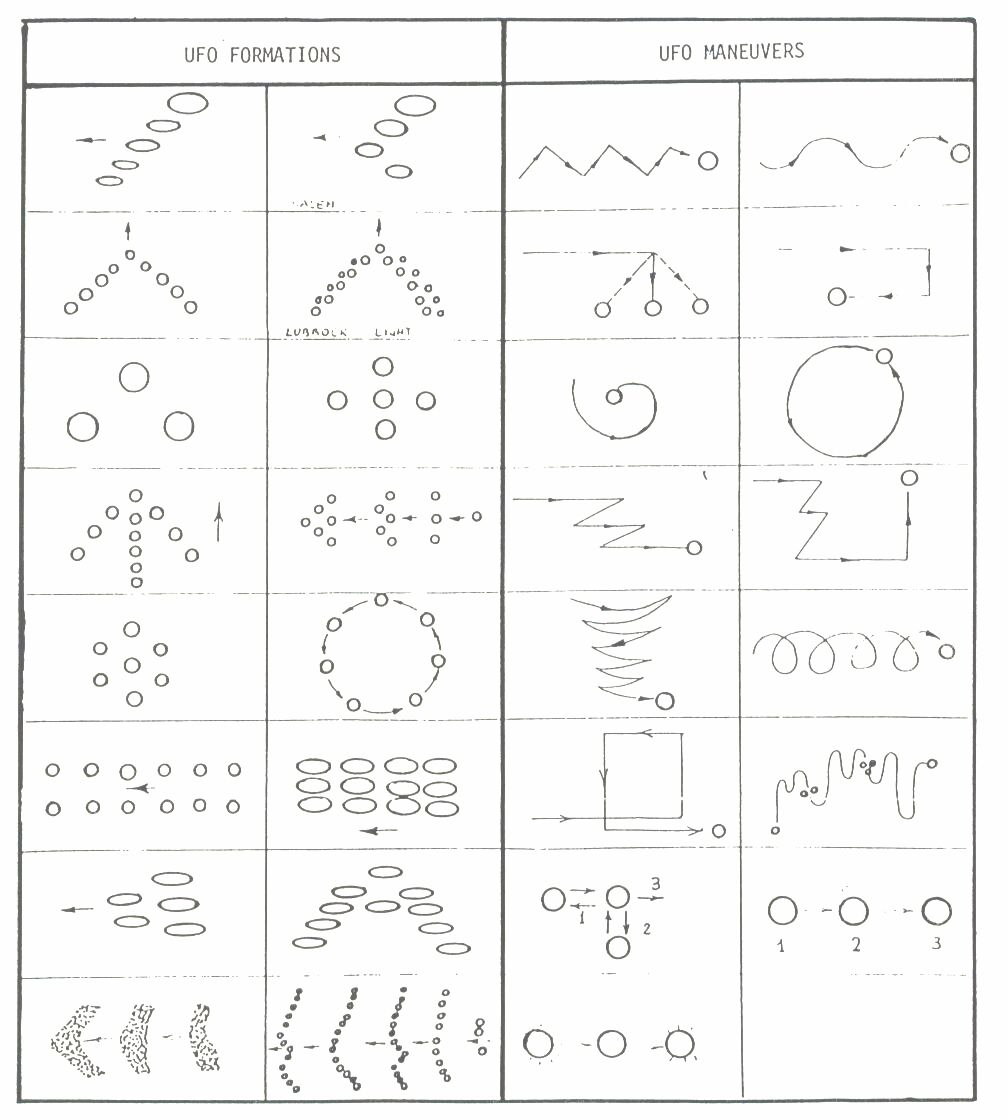
UFO
formations and maneuvers. (Courtesy ICUFON/ACOM)
In
some of the daytime observations, a UFO will appear to be
traveling at the same speed and elevation as a small aircraft
without displaying any of the usual attributes that normally
distinguishes a UFO from any man-made devices. Sometimes,
the object is described as a pure white oval or cigar-shape,
moving along in a straight path, and keeping a steady pace
until it disappears from sight. I have been a witness to
a few of these sightings, including one which I video-taped
back in May 1992.



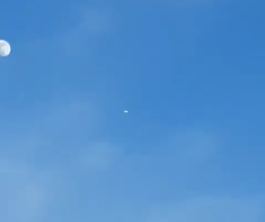
Blind
River, Ontario - February 16, 2019
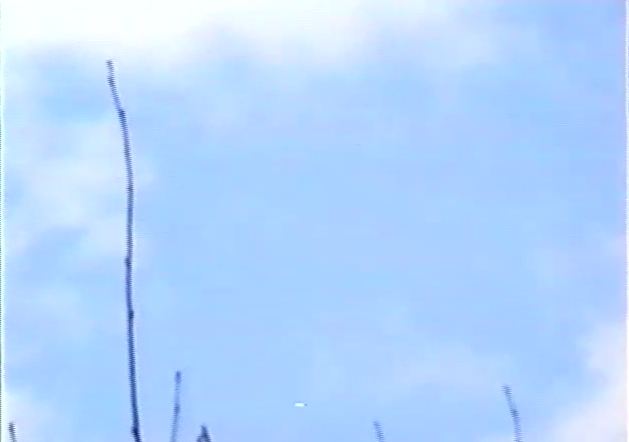
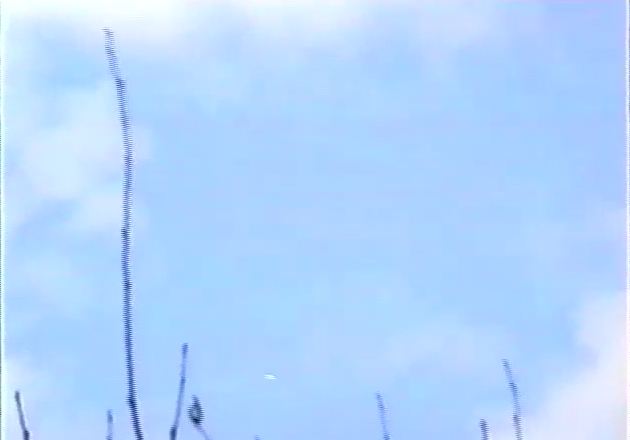


Hanmer,
Ontario - May 2, 1996
Some
observers of daytime UFO sightings have also reported seeing
a dark object instead of a light-colored one, such as in
this case from Scotland, June 2, 2018.
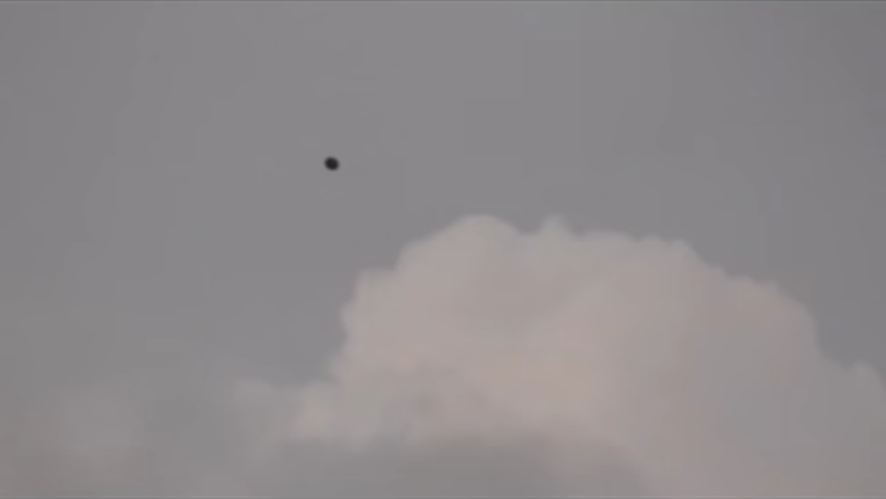
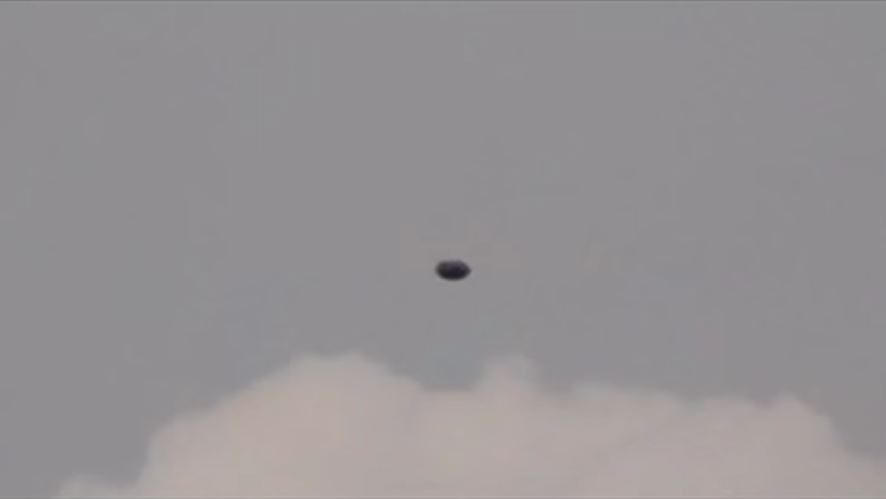
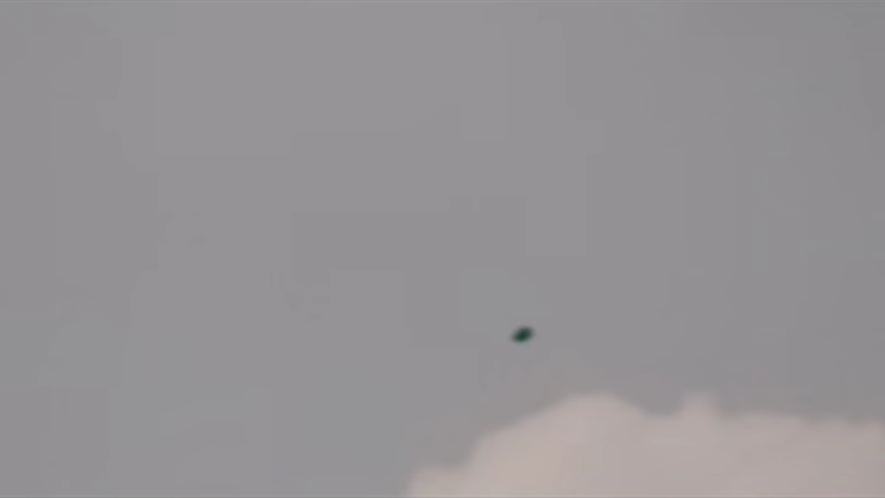
Scotland,
United Kingdom - June 2, 2018
|
|
|
7)
Level of High Strangeness
In
the category of High Strangeness, you will find characteristics
associated with UFOs that are way outside of the performance
envelope of any conventional aircraft. Once you've reached
that point of High Strangeness, you can only come to one
conclusion: UFOs are extraterrestrial in origin!
As
early as the 1950s, UFOs have been captured on infrared
cameras! One recent case took place on March 5, 2004, in
the Campeche region of Mexico. The video, filmed by pilots
using an infrared camera, shows 11 bright objects moving
rapidly in the sky. The objects were reported to be invisible
to the eye - the pilots turned on the infrared camera to
track them after three of them were picked up by the radar.
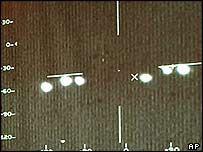
Some
of the objects were reportedly
picked up by air force radar.
There
are many other cases when UFOs were visible to the naked
eye, and yet, totally undetected by radar instruments!
UFOs
have the ability to split in two or more parts. In some
rare cases, the object is stationary and produces secondary
objects (sometimes referred to as "satellite objects").
In other cases, small lights of various colors have been
seen merging with the main object!
It
has also been reported that UFOs have the ability to switch
themselves off like a light bulb when intercepting military
jets would approach them. Once the jets have left the area,
the object would then switch itself on again!
UFOs
also have the ability to change their shape or camouflage
themselves as conventional vehicles, which would make it
easy for them to perform their "job" without attracting
too much attention. Shape-shifting
UFOs are a fascinating aspect of this phenomenon
because it demonstrates an ability that our own man-made
aircraft cannot do!
UFOs
have the ability to make 90° right angle turns without
slowing down, which is something conventional aircraft cannot
do.
UFOs have the ability to submerge into lakes and oceans
with ease, becoming USOs
or Unidentified Submerged Objects. Incredibly, they have
been tracked on sonar at depths of 20,000 feet, which is
impossible for man-made submersibles because the crush depth
of submarines is at 7,000 feet! After
being under the water for a certain period of time, they
re-surface and fly off at great speed. No power on Earth
has this kind of technology!
UFOs also have the ability to "suck" or drain
electrical power directly from high voltage lines, which
sometimes results in power interruptions or power
blackouts. Several such incidents have taken
place in the Sudbury area and elsewhere!
UFOs
that have been seen on or near the ground have left behind
physical
traces of various kinds: burn rings, flattened
grass, unusual oil-type residues, total dehydration of the
soil, landing gear marks that are deep enough to indicate
something of tremendous weight. In cases of Close Encounters,
UFOs have had physiological
effects on witnesses, as well as plants and
animals in ways that do not conform with any natural phenomena
or man-made devices.
The
incredible dimensions of the so-called "Mother Ships",
and the way they hover and slowly navigate our skies, not
to mention the lack of engine sounds or visible means of
propulsion negate the possibility that these are super-secret,
experimental aircraft developed by the U.S. military. The
sophistication and highly advanced level of technology demonstrated
by these otherworldly objects makes it impossible for us
to deny their extraterrestrial origin.
If
these extremely large and silent objects were truly the
product of earth-based technology and development, the United
States Air Force would be using these amazing vehicles instead
of noisy jet fighters to fight their wars. They would attain
absolute control of the air space and they'd have the power
to attack any country in the world with impunity!
|
|
|
8)
Duration of sighting
Most
UFO sightings last only seconds or a few minutes, but there
have been many instances when UFOs have remained in full
view for an hour or more, giving eyewitnesses the opportunity
to observe and "soak in" their observations for
an extensive period of time. Then later, when they report
their encounter, they can remember everything in great detail.
Unlike
a three-second car accident, which is something we normally
see and happens fairly frequently and where details can
be easily forgotten over time, UFO eyewitnesses will recall
every detail of their sighting because it is etched in their
minds. When you see something that you are not accustomed
to, you remember it forever!
UFO
sightings are so much out of the ordinary that the witnesses
remember the incident as if it happened yesterday. I've
had recent cases where the witnesses have come forward to
report things they saw way back in the 1950s! It is something
they will remember until the day they die!
|
|
|
Excerpt
taken from the MAJESTIC-12 GROUP SPECIAL OPERATIONS MANUAL

EXTRATERRESTRIAL
ENTITIES AND TECHNOLOGY,
RECOVERY AND DISPOSAL
9.
Description of Craft
Documented
extraterrestrial craft (UFOBs) are classified in one of
four categories based on general shape, as follows:
a.
Elliptical, or disc shape. This type of craft is of
a metallic construction and dull aluminum in color. They
have the appearance of two pie-pans or shallow dishes pressed
together and may have a raised dome on the top or bottom.
No seams or joints are visible on the surface, giving the
impression of one-piece construction. Discs are estimated
from 50-300 feet in diameter and the thickness is approximately
15 per cent of the diameter, not including the dome, which
is 30 per cent of the disc diameter and extends another
4-6 feet above the main body of the disc. The dome may or
may not include windows or ports, and ports are present
around the lower rim of the disc in some instances. Most
disc-shaped craft are equipped with lights on the top and
bottom, and also around the rim. These lights are not visible
when the craft is at rest or not functioning. There are
generally no visible antenna or projections. Landing gear
consists of three extendible legs ending in circular landing
pads. When fully extended this landing gear supports the
main body 2-3 feet above the surface at the lowest point.
A rectangular hatch is located along the equator or on the
lower surface of the disk.
b.
Fuselage or cigar shape. Documented reports of this
type of craft are extremely rare. Air Force radar reports
indicate they are approximately 2 thousand feet long and
95 feet thick, and apparently they do not operate in the
lower atmosphere. Very little information is available on
the performance of these craft, but radar reports have indicated
speeds in excess of 7,000 miles per hour. They do not appear
to engage in the violent and erratic maneuvers associated
with the smaller types.
c.
Ovoid or circular shape. This type of craft is described
as being shaped like an ice cream cone, being rounded at
the large end and tapering to a near-point at the other
end. They are approximately 30-40 feet long and the thick
end diameter is approximately 20 per cent of the length.
There is an extremely bright light at the pointed end, and
this craft usually travels point down. They can appear to
be any shape from round to cylindrical, depending upon the
angle of observation. Often sightings of this type of craft
are elliptical craft seen at an inclined angle or edge-on.
d.
Airfoil or triangular shape. This craft is believed
to be new technology due to the rarity and recency of the
observations. Radar indicates an isosceles triangle profile,
the longest side being nearly 300 feet in length. Little
is known about the performance of these craft due to the
rarity of good sightings, but they are believed capable
of high speeds and abrupt maneuvers similar to or exceeding
the performance attributed to types "a" and "c".
|
Hangar
1 takes a look into the discovery of a top-secret Special
Operations Manual.
|
| |
|
| Identification
of Parts
Technical
Overview - Brief overview of UFO parts and
technical layouts
Tech
Geek - out of this world photos for the true
Parts Geek
Parts
Surplus - Find parts of any kind
Parts
Geek - automotive parts for the tech savy
Piper
Parts - explore different parts of aircrafts
|
| |
| |
|
Sketches/Photos copyright of holders. No
infringement intended. For educational purposes only.
|
|
|
